eCommerce in the UAE is booming, with more consumers turning to online shopping for convenience and variety. Amazon, a global leader in eCommerce, offers a lucrative platform for businesses aiming to tap into this growing market. In 2022, amazon.ae brought in $496 million USD in revenue, and we’re here to help you claim your share of it.
However, getting an Amazon UAE seller account setup and running can seem like quite the complicated task.
This blog aims to guide eCommerce store owners through the nuances of setting up and optimizing your Amazon UAE seller accounts, keeping on top of Amazon UAE 2024 updates, and ensuring you are well-equipped to succeed.
So, let’s dive into this Amazon UAE seller guide!
Before You Get Started…
Getting an Amazon UAE seller account setup in the UAE is a straightforward process, but it requires careful attention to detail and preparation of necessary documents. Here’s a checklist of what you’ll need to get started:
Free Zone vs. Mainland License: Decide whether a Free Zone or a mainland license best suits your business model. Free Zone licenses offer benefits like no currency restrictions and customs tax exemptions, making them an attractive option for many sellers. Complete your eCommerce license application and present your passport at the licensing offices to finalize the process.
Visa Requirement: Foreigners looking to sell on Amazon UAE need a valid resident's visa. This can be obtained at an immigration center, where you'll undergo a fitness test, blood tests, and chest x-rays as part of the application process.
A Valid Corporate Bank Account: The UAE boasts a robust financial sector with various banks catering to foreign traders. Each bank has its own set of rules and required documents for opening a corporate bank account. Spend time researching to choose a bank that aligns with your business needs and facilitates your financial transactions smoothly.
Identity Verification: A valid national identity document must be uploaded during the application process. This is a critical step for Amazon to verify the authenticity of sellers on its platform.
Amazon UAE Seller Account Setup
Once you have gathered all the necessary documents and information, follow these steps to sell on Amazon UAE:
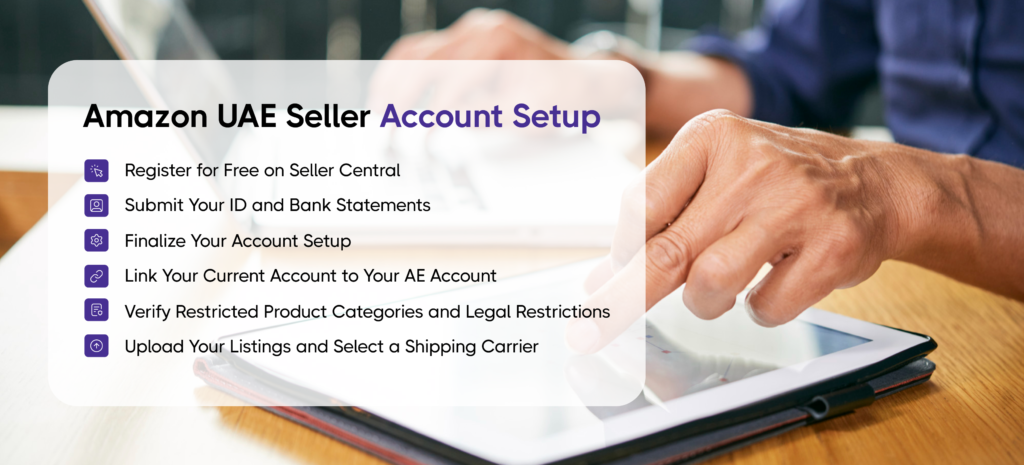
Register for Free on Seller Central
Begin by visiting sellercentral.amazon.ae. This is Amazon's dedicated portal for sellers where you can manage your account, listings, and sales. You'll need to provide basic information about your business, including your legal business name, address, and contact details.
Submit Your ID and Bank Statements
As part of Amazon's security measures, you'll be required to submit a valid ID. This could be a passport, national ID card, or driver's license.You’ll also need to provide your bank statements to verify your financial details. This step is crucial for setting up payment methods and ensuring smooth transactions.
Finalize Your Account Setup
Once all the necessary information is provided, review your details for accuracy. Submit your application and wait for Amazon's approval. This process can take a few days as Amazon verifies your information.
Link Your Current Account to Your AE Account
If you're already selling on another Amazon marketplace, you can link your existing account to your new UAE account. This is done through Seller Central by navigating to 'Inventory' and then to 'Sell Globally'. This allows you to manage multiple accounts from a single interface, simplifying the process of selling in different markets.
Verify Restricted Product Categories and Legal Restrictions
Before listing products, check Amazon's restricted product categories and ensure your items comply with the UAE's legal regulations. Regularly review Amazon's policies and UAE laws to avoid listing prohibited items and facing potential penalties.
Upload Your Listings and Select a Shipping Carrier
Upload your product listings with detailed descriptions, high-quality images, and competitive pricing. Choose a shipping carrier and fulfillment option that aligns with your business needs (you can learn more about that in the sections below).
Amazon UAE Fulfillment Options
Amazon FBA in UAE
Amazon FBA (Fulfillment by Amazon) simplifies logistics for sellers by handling storage, packing, shipping, and customer service. This service is especially beneficial in the UAE, streamlining operations and allowing sellers to focus on business growth.
eShipper UAE
Here at eShipperUAE, we offer customized logistics solutions, ideal for sellers seeking professional handling of their inventory with flexibility. Our services include warehousing, order fulfillment, customs clearance and shipping management, complementing Amazon's offerings.
Self Shipping
Self-shipping is an option for sellers who prefer direct control over their inventory and shipping. It requires more involvement in warehousing and logistics but offers maximum control over the shipping process, suitable for products needing special handling or those not eligible for FBA.
Amazon Seller Fees in 2024
Understanding and managing seller fees is essential for maintaining profitability on Amazon. Here are some that you need to keep in mind:
Referral Fees
Amazon charges referral fees for each sale, ranging from 4% to 15%, based on the product category.
Fulfillment Fees:
Using Amazon FBA in UAE, which offers storage, packing, and delivery services, incurs fees based on product size and weight. This service also helps in earning the Prime Badge, attracting more customers.
Additional Costs:
You could also incur storage fees for extended warehouse use, advertising costs for product promotion, and charges for any premium services used.
Understanding Amazon UAE’s 2024 Updates
The year 2024 brings with it several updates for Amazon sellers in the UAE, designed to enhance the selling experience and meet evolving consumer demands.
These updates include changes to seller fees, adjustments in FBA operations, and new features in seller central. A new Amazon fulfilment centre has also been announced and is scheduled to open in Abu Dhabi this year.
Staying on top of these updates is important for sellers to keep their competitive edge!
Selling Strategies for Amazon UAE
Once your account is up, you still have to learn how to sell on Amazon UAE.
Tools like Amazon's Best Sellers and Categories can help your business identify high-demand products and understand market trends. Analyzing competitor listings and customer reviews can also provide insights into consumer preferences and gaps in the market.
Amazon also has promotional tools that you can use, such as Lightning Deals and Sponsored Products, which can increase visibility and drive sales of your products.
Staying on top of trends in eCommerce in the UAE and top marketing strategies is also important. Incorporating relevant keywords into your product titles, bullet points, and descriptions can help improve search visibility. Amazon's A9 algorithm prioritizes listings that match customer search queries and demonstrate high conversion rates.
Conclusion
Selling on Amazon UAE in 2024 presents a wealth of opportunities for your eCommerce business.
By understanding the latest updates, optimizing your operations with Amazon FBA, staying on top of Amazon seller fees in 2024 and leveraging eShipper's logistics and insights expertise, you can set your business up for success.
From cost-effective shipping options to custom warehousing solutions, partnering with eShipperUAE allows you to focus on growing your Amazon business while we handle the logistics.
Start optimizing your Amazon UAE seller account today and take the first step towards unlocking the full potential of your eCommerce business.