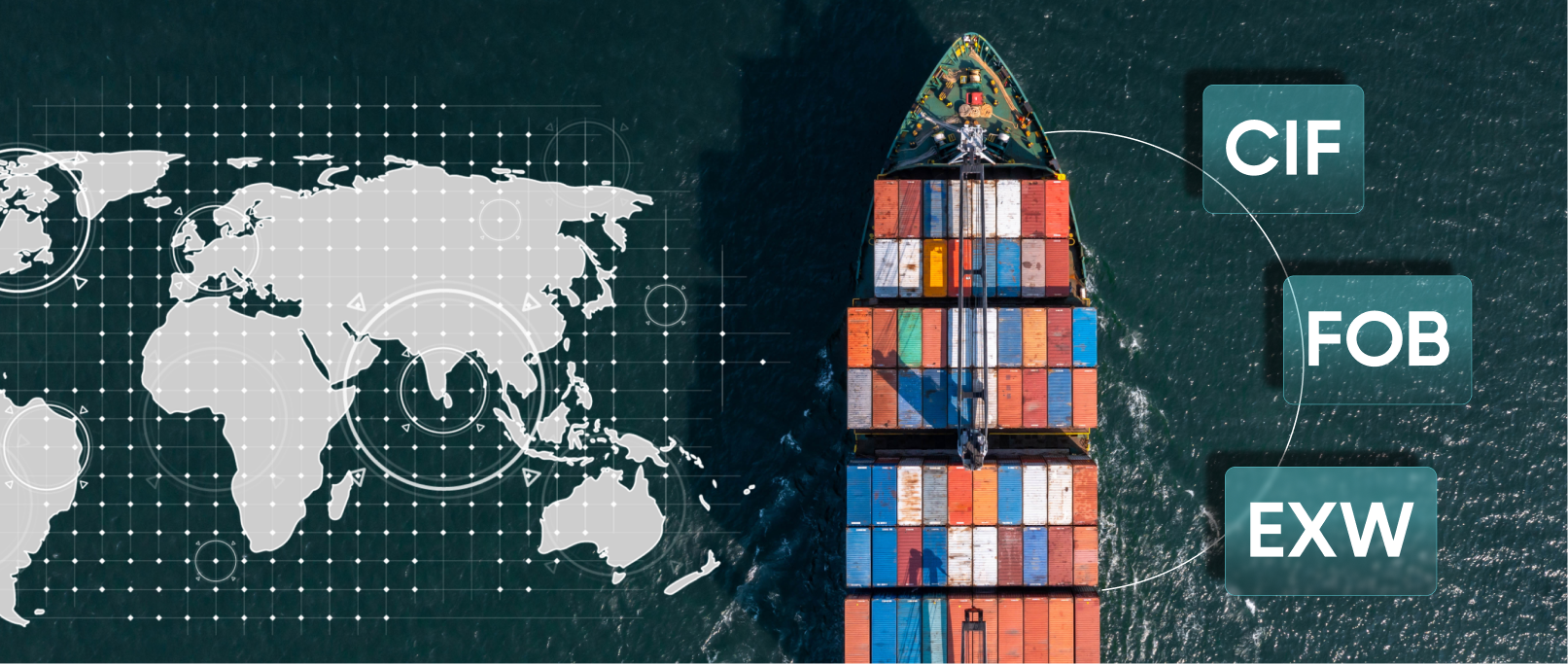
FOB, EXW, CIF Explained: What These Shipping Terms Really Mean for UAE Businesses
Girish Nair
September 14, 2026
If you’re a seller in the UAE looking to expand internationally, understanding how goods move across borders is essential. Choosing the right arrangement for your shipments can save money, reduce risk, and streamline your operations.
Terms like FOB, EXW, and CIF may seem confusing at first, but knowing what each entails will help you manage responsibilities, costs, and liabilities more effectively. This guide explains these key trade terms and how they apply in practical business situations.
What is FOB (Free On Board)?
FOB, or Free On Board, is a commonly used international arrangement for sea freight. Under FOB, you, as the seller, are responsible for delivering the goods to the port of shipment and loading them onto the buyer’s chosen vessel. Once the cargo is on board, the buyer assumes responsibility for the goods, including freight costs, insurance, and risks during transit.
For example, imagine you’re shipping electronics from Dubai to the US. Under FOB, you ensure the products are packed, cleared through customs, and loaded onto the ship at the designated port. After loading, the buyer takes over responsibility. This arrangement is particularly useful if you want to control how your goods leave your location but are willing to transfer the shipping responsibility once they are safely on board.
Key seller responsibilities under FOB:
Packaging and preparing goods for shipment
Delivering goods to the port and handling local export duties
Loading cargo onto the vessel
Key buyer responsibilities under FOB:
Paying ocean freight and insurance after loading
Managing unloading at the destination port
Covering any inland transportation from port to final destination
You can read more about FOB shipping terms in detail here.
What is EXW (Ex Works)?
EXW, or Ex Works, shifts most of the responsibility to the buyer. With this arrangement, your obligation as the seller is simply to make the goods available at your premises, whether it’s a warehouse, factory, or office. The buyer arranges transport, export documentation, customs clearance, and insurance from that point onward.
For instance, if a buyer in Germany purchases furniture from your Dubai warehouse under EXW terms, they are responsible for collecting the shipment, paying for transportation, and handling all export and import procedures. Your role is essentially to have the goods ready for pickup.
Why sellers use EXW:
Reduces your liability and logistical involvement
Simple to administer, especially for small or bulk shipments
Let buyers handle shipping according to their preferred carriers
Potential drawbacks:
Buyers may be responsible for complex export procedures
Detailed guidance on EXW freight terms can be found here.
What is CIF (Cost, Insurance, and Freight)?
CIF, or Cost, Insurance, and Freight, is another option commonly used for ocean shipments. Unlike EXW, under CIF, you, the seller, take responsibility for shipping costs, freight, and insurance up to the buyer’s destination port. However, the risk of loss transfers to the buyer once the goods are loaded onto the vessel.
For example, if you ship 500 laptops from Sharjah to Singapore under CIF terms, you cover the freight cost and marine insurance. Once the shipment is on the vessel, the buyer assumes the risk, but if any damage occurs during transit, they can claim against the insurance you arranged.
Buyers who want seller-managed shipping and insurance
Choosing the Right Shipping Term for Your Business
Selecting between FOB, EXW, and CIF depends on your operational capacity, risk tolerance, and buyer relationships.
Use FOB if you want to ensure goods are properly loaded and shipped but prefer buyers handle the risks and costs afterward.
Use EXW for simple domestic or regional shipments where the buyer is capable of handling export logistics.
Use CIF when buyers need the convenience of having shipping and insurance arranged by the seller.
For UAE sellers looking to simplify international shipping, partnering with eShipper UAE provides a single platform to manage freight forwarding, customs clearance, insurance, and last-mile delivery. Their expertise ensures your shipments reach buyers safely and on time, allowing you to focus on growing your business rather than navigating complex logistics.
Common Pitfalls and How to Avoid Them
Even experienced sellers can encounter challenges with these arrangements:
Misunderstanding responsibility: Always clarify who handles costs, insurance, and risk at each stage.
Incomplete documentation: Customs and export paperwork errors can delay shipments.
Choosing the wrong term for your buyer: Consider their location, experience, and capacity to handle transport.
Underinsuring shipments: Even with CIF, verify that the insurance coverage matches the value of your goods.
Working with eShipper UAE ensures that shipments comply with regulations, are fully insured, and reach buyers on time without unnecessary delays.
Conclusion
For UAE sellers, understanding FOB, EXW, and CIF can prevent costly mistakes, clarify responsibilities, and improve international trade efficiency. By choosing the right arrangement, you can control risk, manage costs, and maintain strong buyer relationships. Partnering with eShipper UAE ensures comprehensive solutions for freight forwarding, insurance, and customs support, letting your shipments reach their destination safely and on time while you focus on scaling your business.
FAQ
FOB requires the seller to deliver goods to the port and load them, whereas EXW only requires the seller to make goods available at their premises.
Under CIF, the seller pays for freight and insurance until the goods reach the buyer’s port. Risk transfers to the buyer once the goods are loaded onto the vessel.
It depends on the buyer’s experience and logistics capabilities. CIF is convenient for buyers who want the seller to manage shipping and insurance, while FOB and EXW give buyers more control but also more responsibility.
No. CIF is only suitable for shipments via sea or inland waterways.
Costs can arise from customs duties, taxes, and inland transportation. Always clarify responsibilities in your agreement.
EXW usually lowers the seller’s cost since the buyer handles most transport and insurance.
You retain responsibility for goods until they are loaded onto the ship. Proper packing and port handling are crucial.
The buyer benefits from convenience, as the seller arranges shipping and insurance, reducing logistical workload.
As a UAE eCommerce seller, the holiday season can feel like navigating a complex maze. Demand spikes, courier surcharges, public holidays, and last-minute orders all add pressure to your logistics operations. Without careful planning, you risk delayed shipments, unhappy customers, and missed revenue opportunities. In this guide, we’ll walk you through smart shipping strategies to help […]
Selling from the UAE? Here’s What You Need to Know About Going Global If you run an eCommerce business in Dubai, Abu Dhabi, or any of the UAE’s free zones, chances are you’ve noticed an increase in international demand. Maybe it started with a few cross-border orders. Maybe your customers began asking if you ship […]
eshipperuae
7 mins read
We'll send more eCommerce insights, tips, and inspiration straight to your inbox.
Thank you for reaching out!
We have received your information and will get back to you soon.