As a UAE eCommerce seller, you’ve likely experienced a surge in order volumes especially during the Dubai Shopping Festival, Ramadan promotions, and year-end holiday events. While these periods are lucrative, they also challenge your logistics operations. Warehouses get crowded, deliveries face congestion, and customers expect fast, accurate shipping.
Without preparation, these pressures can lead to stockouts, delays, and dissatisfied buyers. Understanding how seasonal sales affect e-Commerce logistics in the UAE, and planning accordingly, is essential to keeping your operations smooth and your customers happy.
How Seasonal Sales Influence eCommerce Logistics in the UAE
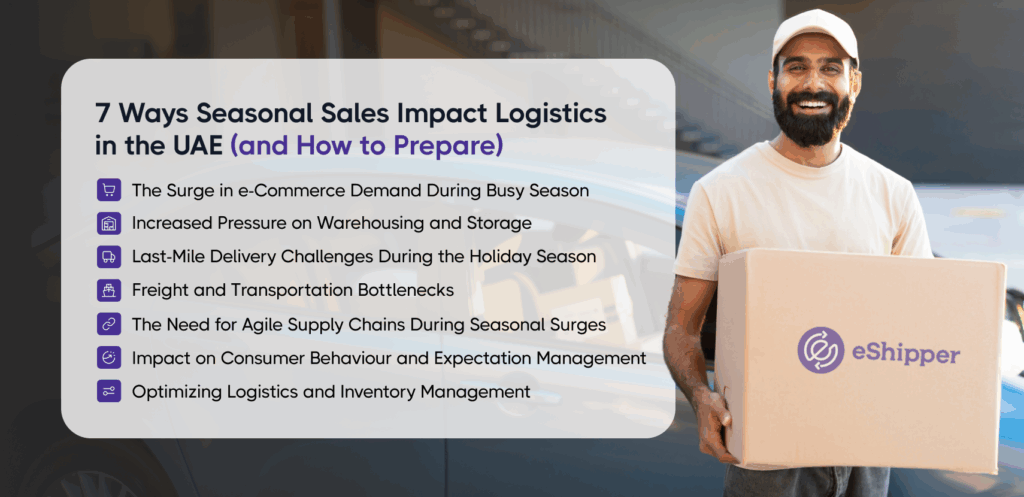
1. The Surge in E-commerce Demand During Seasonal Sales
Peak sales periods create a sudden spike in online orders. Customers expect rapid delivery, which places pressure on your entire supply chain. Using predictive analytics allows you to anticipate demand, optimize inventory, and allocate resources effectively. By analyzing past sales, seasonal trends, and consumer behavior, you can forecast order volumes and storage needs accurately.
How to prepare:
Forecast high-demand items: An estimated 40% of holiday spending takes place within the five-day window from Thanksgiving to Cyber Monday, making it crucial to anticipate popular products.
Adjust stock levels: On an average, 26–28% of shoppers prioritize food and consumables, so adjusting inventory for these categories can prevent shortages.
Leverage eShipper UAE: Approximately 70% of online shoppers preferring home delivery and around 80% of budgets spent by Cyber Monday, scalable fulfillment is essential.
2. Increased Pressure on Warehousing and Storage
Seasonal peaks strain warehouse operations in Dubai, Abu Dhabi, and Sharjah. Space becomes limited, labor needs increase, and packing times can slow down. Businesses that plan for tariffs and freight changes proactively are better positioned to maintain efficiency.
How to prepare:
Optimize warehouse layouts for faster picking and packing.
Implement real-time inventory tracking to monitor stock and reduce delays.
By planning ahead of busy season, your warehouse operations can handle seasonal surges without compromising order accuracy.
3. Last-Mile Delivery Challenges During the Holiday Season
The last mile delivery from your warehouse to the customer is often the most challenging. High parcel volumes, urban congestion, and customer expectations for quick delivery create pressure. Predictive analytics can optimize delivery routes and schedules, minimizing delays.
How to prepare:
Partner with multiple carriers to distribute volume effectively.
Communicate accurate delivery estimates and tracking information to customers to manage expectations.
4. Freight and Transportation Bottlenecks
Higher shipping volumes during seasonal sales can cause congestion at ports and along trucking routes. Tariffs, customs regulations, and last-minute demand spikes add complexity and logistics cost.
How to prepare:
Schedule shipments well in advance to avoid delays.
Monitor trade regulations and tariffs that may impact costs.
Use predictive analytics to optimize freight routes and timing.
Rely on eShipper UAE for end-to-end freight solutions that keep shipments on schedule.
5. The Need for Agile Supply Chains During Seasonal Surges
Static supply chains struggle under peak-season stress. Flexibility and responsiveness are essential. Agile supply chains can adjust in real time to changes in demand, supplier delays, or route disruptions
How to prepare:
Maintain multiple suppliers to mitigate risks.
Use scenario-based planning to prepare for demand spikes.
Integrate digital logistics tools like eShipper UAE to monitor orders, manage inventory, and adjust delivery plans dynamically.
6. Impact on Consumer Behavior and Expectation Management
During seasonal sales, shoppers expect fast shipping, accurate orders, and real-time tracking. Even minor delays can harm satisfaction. Some buyers may even abandon carts if they perceive delays or unexpected fees, such as tariffs or customs charges.
How to prepare:
Keep customers updated with shipment tracking.
Offer multiple delivery options, including express and overnight services.
Efficient logistics solutions is essential to maintain profitability and customer satisfaction. Overstocking ties up capital, while understocking risks lost sales. Predictive analytics and real-time data can help determine optimal inventory levels and improve supply chain visibility.
How to prepare:
Implement inventory management systems that track demand trends.
Use eShipper UAE to coordinate warehouse, fulfillment, and last-mile services in a unified platform.
Adjust stock allocation dynamically based on real-time sales and seasonal forecasts.
Streamline Your UAE eCommerce Logistics for Every Seasonal Sale
Seasonal sales bring both opportunity and challenge for UAE eCommerce sellers. By anticipating demand, optimizing warehouses, leveraging last-mile delivery solutions, and embracing agile logistics strategies, you can maintain high customer satisfaction while managing costs. Platforms like eShipper UAE provide the tools, services, and expertise to navigate peak seasons efficiently from warehousing and fulfillment to last-mile delivery and customs clearance. Preparing proactively ensures your business scales confidently during seasonal surges.
FAQ
Shipping can be slower due to higher volumes and congestion. Using predictive analytics and last-mile solutions helps maintain on-time delivery.
Discover how seven key industries in the UAE depend on dedicated logistics for efficiency, scalability, and growth, from pharma to luxury to automotive.